
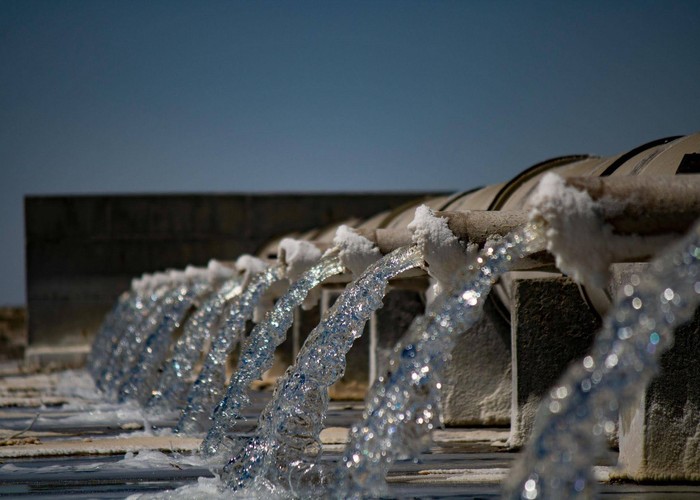
Water conservation is the deliberate reduction of water consumption through more efficient use of available resources, combined with the recycling and reuse of water already on site. For South African businesses, it has become a financial discipline as much as an environmental one.
Municipal water tariffs across South Africa have increased faster than inflation for more than a decade. Restrictions and the declining reliability of bulk supply have added operational risk to that cost pressure. The businesses managing this well are not simply using less water. They are treating and reusing the water they already consume, reducing their dependency on the municipal supply line entirely.
This guide covers the practical steps: how to audit your water use, where losses hide, which recycling systems apply to your operation, and what the financial return looks like in practice.
Why Water Conservation Is a Financial Priority for South African Businesses
South Africa is classified as a water-scarce country. The country receives an average rainfall of around 500mm per year, well below the global average of 860mm. That scarcity translates directly into tariff pressure: municipalities facing infrastructure backlogs pass those costs upward to commercial and industrial consumers.
A large commercial facility paying R30 per kilolitre in municipal water tariffs and discharging 500,000 litres per day faces a water cost exposure of R15,000 per day before any conservation measures are in place. Across a year, that is R5.4 million spent on water that is used once and discharged.
The case for on-site treatment and reuse is not an environmental argument. It is a capital allocation argument. Treated wastewater that goes back into cooling towers, irrigation, or toilet flushing is water the business does not buy from the municipality a second time. Use SewTreat’s calculator to run the numbers for your specific tariff and flow rate.
Step One: Conduct a Water Audit
A water audit is the starting point for any meaningful conservation programme. Without knowing where water enters your facility, how it moves through each process, and where it exits, no reduction strategy can be properly targeted.
What a Water Audit Covers
A thorough audit maps the following across your site:
- Total metered consumption by period (monthly, seasonal)
- Consumption by use category: sanitation, cooling, process water, irrigation, and washbay
- Inlet and outlet flow measurements to identify the gap between what enters and what is accounted for
- Water quality at each use point, to assess whether potable-quality water is being used for non-potable applications
For most commercial and industrial operations, this exercise alone reveals that a significant proportion of potable municipal water is being consumed in applications where treated wastewater would perform equally well. Toilet flushing and cooling tower make-up are the most common examples. Irrigation frequently follows.
SewTreat’s on-site water treatment assessment covers the same ground, with the added output of a treatment system specification and cost estimate.
Leak Detection
In South African commercial buildings, undetected leaks account for a material share of total water consumption. A leaking toilet cistern can waste up to 200 litres per day. A single dripping tap wastes around 30 litres per day. Across a large estate, retail complex, or industrial facility with hundreds of fixtures, the cumulative volume is significant.
Leak detection methods used in commercial settings:
- Meter readings taken at 15-minute intervals overnight, when consumption should be near zero. Any non-zero reading indicates a leak somewhere in the system.
- Pressure zone monitoring, which identifies pressure drops across specific sections of the distribution network.
- Acoustic listening devices for underground pipe leaks on large sites.
- Thermal imaging for slab leaks in commercial buildings.
Leak detection is the lowest-cost water conservation action available to most businesses. It requires no capital investment in treatment systems and delivers an immediate reduction in billed consumption.
Water Recycling Systems for Business
Once audit findings are in hand, the conservation strategy shifts to infrastructure. The systems below cover the main recycling options available to South African businesses.
Treated Wastewater Reuse
Treated wastewater reuse is the highest-impact water conservation strategy available to operations generating significant daily volumes. Wastewater that has been treated through a biological treatment plant meets the quality standard required for a wide range of non-potable applications.
Irrigation: Treated water directed to landscaping and sports fields replaces potable supply entirely for that application. For a large estate or commercial property with significant green space, this can represent 20-30% of total water demand.
Cooling towers: Cooling tower make-up water is one of the largest single water uses in commercial and industrial facilities. Treated wastewater, polished to the quality specification of the cooling system, supplies this demand without drawing on potable supply.
Industrial process water: Washbay operations and laundry facilities can operate on treated water rather than potable supply. The quality specification for each application determines the level of treatment required.
Toilet flushing: In large commercial buildings, toilet flushing accounts for roughly 30% of total water consumption. Directing treated wastewater to sanitation supply removes that demand from the municipal account entirely.
SewTreat’s full water reuse systems are designed to cover multiple reuse streams from a single treatment installation, rather than building separate systems for each application.
Rainwater Harvesting
Rainwater harvesting captures precipitation from roofs and hardstanding areas, filters it to the required quality standard, and stores it for use as a supplement to municipal supply. In some configurations it serves as the primary source for non-potable applications.
At Pick n Pay’s Eastport Logistics Park, SewTreat designed a system that harvests rainwater into a 3-million-litre dam. Combined with a biological treatment plant for the truck washbay, the system delivers R4.7 million in annual savings. The rainwater dam provides supply buffer during periods when municipal pressure is low.
For South African businesses in higher-rainfall regions, including KwaZulu-Natal, the Eastern Cape, and the Western Cape winter rainfall zone, the yield from a well-designed rainwater harvesting system can be substantial. SewTreat’s rainwater harvesting systems cover design, storage, treatment, and distribution.
Washbay and Laundry Water Recycling
Washbay wastewater contains hydrocarbons and suspended solids from vehicle cleaning activity that make it unsuitable for direct discharge without treatment. Treated and recycled, the same water can supply the washbay again, reducing fresh water draw by 70-80% on a well-designed closed-loop system.
Laundry facilities face a similar profile: high-volume water use with consistent contamination that responds well to treatment. Treated laundry water, polished to the required standard, can be reused within the laundry process or redirected to other non-potable applications on site.
SewTreat’s washbay and laundry wastewater treatment systems are designed for closed-loop reuse from the outset, not as an afterthought.
What These Systems Save in Practice
SewTreat’s installed systems demonstrate what water conservation infrastructure delivers in measurable financial terms.
Eastlands Mature Living Estate, Benoni: A 120,000-litre-per-day biological wastewater treatment system, retrofitted from a failed competitor installation, now treats and reuses wastewater across the development for irrigation. Annual saving: R2.07 million.
Merino Mall, Ermelo: A combined borehole water treatment and wastewater treatment system eliminates municipal water dependency for multiple site applications. Annual saving: R1.4 million.
Pick n Pay Eastport Logistics Park, OR Tambo: A 500,000-litre-per-day system combining rainwater harvesting with a biological treatment plant for the truck washbay. Annual saving: R4.7 million.
KG Mall, Witbank: Treated wastewater from an 80,000-litre-per-day system supplies cooling towers, fire water storage, and sanitation facilities, removing those demands from municipal supply.
Across SewTreat’s client base, on-site treatment and reuse systems consistently reduce water-related operating costs by 40-60% compared to full municipal dependency. Download the full case studies for verified project data.
Efficiency Technologies That Reduce Consumption
Beyond recycling, several technologies reduce the volume of water consumed in the first place.
Variable speed drives on pumps reduce the volume of water cycled through systems during low-load periods, cutting energy draw alongside water consumption.
Smart metering provides real-time consumption data by zone, allowing facilities managers to identify spikes immediately rather than discovering excess consumption on a monthly bill.
Low-flow fixtures in sanitation reduce per-flush and per-use volumes without affecting function. For a large commercial building or estate with hundreds of fixtures, the aggregate saving is material.
Dry cooling systems for industrial heat rejection processes eliminate evaporative loss entirely, though at higher capital cost than wet cooling tower alternatives.
Borehole water treatment reduces municipal draw for operations with access to groundwater. SewTreat’s borehole water treatment systems classify incoming water, apply the appropriate treatment train, and produce output that meets SANS 241 standards for potable use.
Compliance: What South African Law Requires
Water conservation for business is not only a cost decision. There is a regulatory dimension that is becoming more material as the Department of Water and Sanitation increases enforcement activity.
The National Water Act (Act 36 of 1998) governs all water use in South Africa. Any business abstracting groundwater above the general authorisation threshold requires a Water Use Licence (WUL). Operations discharging wastewater to a water resource must comply with DWA General Standards.
The Water Services Act governs supply quality for operations providing water as a service, including residential estates supplying water to multiple units from a shared source.
For most businesses, the compliance question is: are we managing our wastewater correctly, and do we have the monitoring records to demonstrate it? SewTreat’s systems include automated monitoring with live data access, covering operational records and the documentation required for licensing submissions.
Contact SewTreat’s water engineers to discuss what compliance obligations apply to your specific operation and site.
How to Measure Your Potential Savings
The most direct starting point for any water conservation decision is a clear picture of what the investment could return.
SewTreat’s Savings Calculator takes your current water consumption, your municipal tariff rate, and your site type, and produces a projected annual saving based on what comparable operations have achieved after installing a treatment and reuse system.
The calculator takes under two minutes to complete and gives you a working number before any consultant engagement. For operations where the projected saving justifies further investigation, SewTreat’s engineering team can conduct a site assessment and produce a full capital cost estimate.Contact SewTreat directly to discuss your requirements, or download the case studies to see what comparable operations are saving today.